
A study of history is so often a study of food. The human animal needs a couple thousand calories per day in order to keep its cool, and all the epics of the past would have been short indeed without the prerequisite of daily bread. The length of the growing season, the locality of forage and game, and the hardiness of available domesticates have always been central to the human experience, and still are.
This is easy to forget when visiting L’Anse aux Meadows on Newfoundland’s very northern tip, the only authenticated Scandinavian site in North America to predate the arrival of Christopher Columbus. Here, we are enraptured by the fragments of bronze these people left in the mud, by the subtle mounds which had once been their homes, by the replica ships and villages built nearby, and the extraordinary narratives these artifacts describe. It’s so immersive that we overlook the rumbling in our stomachs, the same rumble which must have afflicted the builders of L’Anse aux Meadows, dated to about 1021 CE. For all its archaeological wealth, this site gives us no fields, no stables, no marks whatsoever of Scandinavian agriculture, and yet these people must have eaten.
The “Vikings,” referred to hereafter as Icelanders or Greenlanders depending on their home port, were indeed the first Europeans to cross the North Atlantic, and earned their reputation for warring and raiding, but at their most fundamental, they were farmers. They raised barley, wheat, oat, rye, cow, horse, pig, sheep, chicken, goose, goat, flax, hemp, hop, cabbage, onion, peas and beans, and they brought these species wherever they settled. How their farming was warped by different environments might tell us what L’Anse aux Meadows hasn’t – what these people ate when they sailed off the European map.
Meat and Dairy
In 986 CE, Erik the Red departed Iceland at the head of a small fleet in order to settle a massive, glaciated island he’d discovered over the western horizon, a place named “Greenland.” In tow were the plants and animals with whom these people had traditionally made their living, in Norway and in Iceland. When they arrived in Greenland, they established two settlements – the “Western Settlement” near modern day Nuuk (site of the island’s only salmon river), and the “Eastern Settlement,” located on the island’s southern tip. Greenland was likely warmer back then, benefitting from the Medieval Warm Period between 950-1250 CE.
Erik and his settlers divided up the most promising pasture and set loose their herds of cow, horse, pig, sheep and goat, but this first generation of Greenlanders would eventually make an unsettling discovery. No matter where or what they planted, their crops would not grow. The warm season was simply too short and cold, and virtually overnight, the fate of the Greenlanders fell entirely on their livestock.
And on the merchant willing to brave the tumultuous strait between Greenland and Iceland, bringing with them the culinary luxuries of Europe, especially grains for the making of bread, and honey for the making of mead. The very first merchant to capitalize on the desperation of Greenlanders, in fact, was Icelander Bjarni Herjólfsson, who, in 986 CE, was blown off course on his way to Greenland and became the first European to sight North America, though he did not land. These European commodities were so expensive that many people, especially the poor, simply did without. Fruits, vegetables and grains largely disappeared from their diets, many Greenlanders going their entire lives without seeing a loaf of bread.
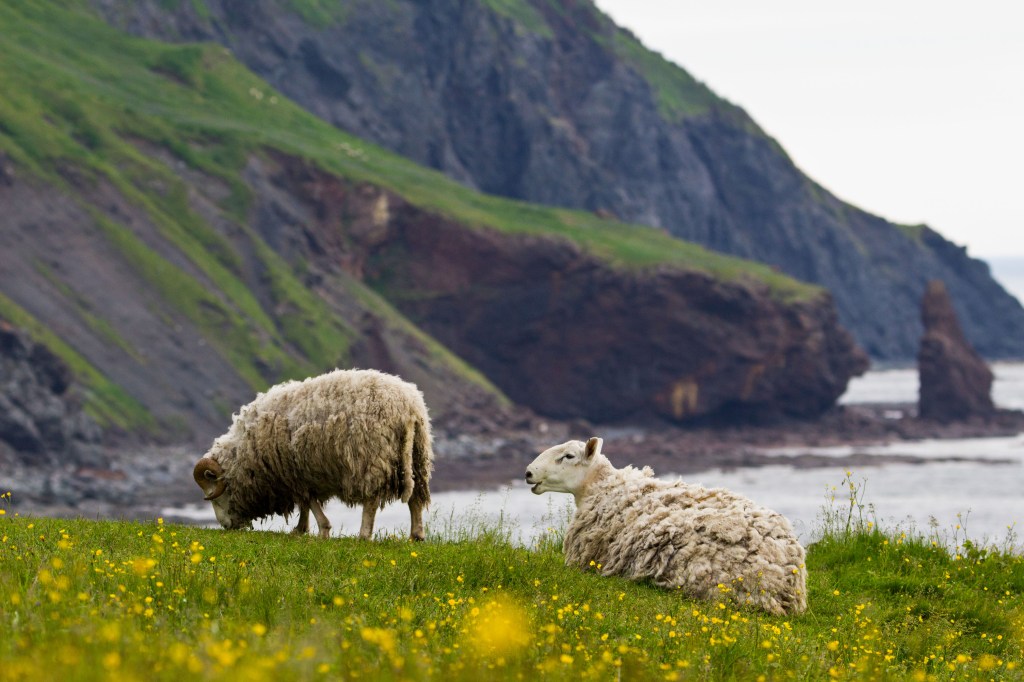
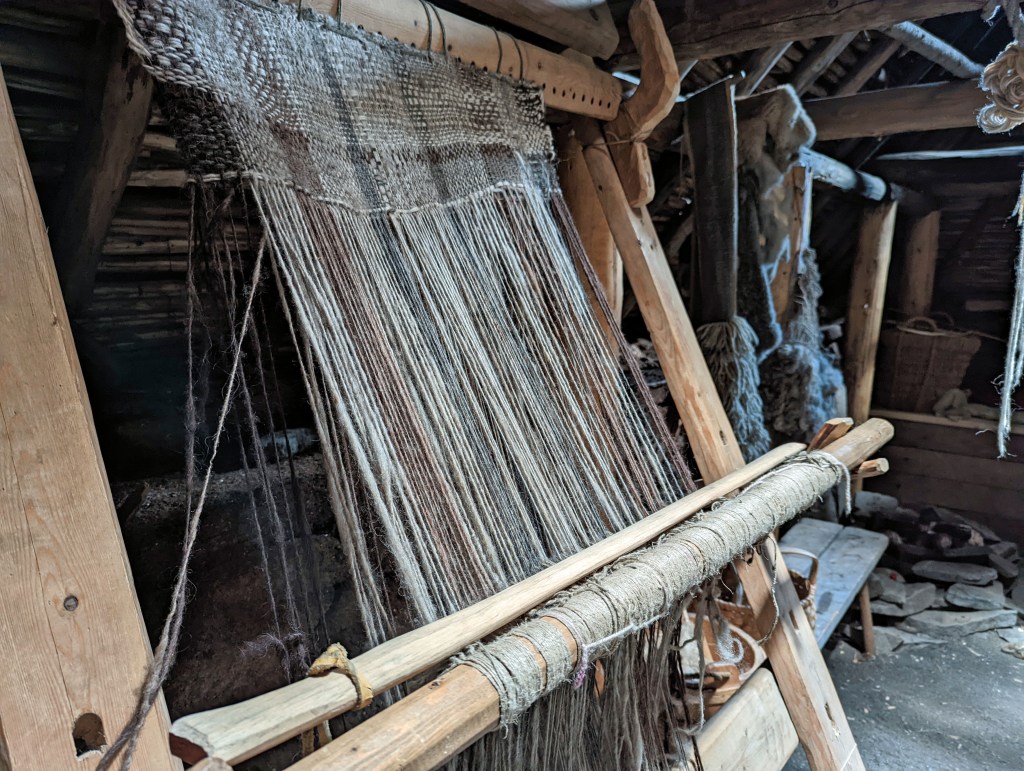
But where crops failed, herds grew. Pasture remained a massive limiting factor, as did winter forage, some farmers resorting to seaweed and wood chips, but for a very long time, their animals did well. Pigs, in all likelihood, disappeared early, but cattle and sheep soon numbered in the thousands, kept for milk, cheese and wool. It was the wealthy Greenlander who could afford to slaughter livestock for meat. Instead they hunted caribou, walrus, seal, whale, seabird, even Polar bear, and were almost certainly eating cod, in Greenland and at L’Anse aux Meadows, as pointed out by historian Mark Kurlansky.
“The Vikings had traveled from Norway to Iceland to Greenland to Canada, and it is not a coincidence that this is the exact range of the Atlantic cod,” he wrote. “They were able to travel to all these distant, barren shores because they had learned to preserve codfish by hanging it in the frosty winter air until it lost four-fifths of its weight and became a durable wood-like plank. They could break off pieces and chew them, eating it like hardtack.”
The Greenlanders became carnivores by necessity, and would stay that way for hundreds of years. Whatever else might have driven them to explore North America, a deprived palate seems as good a reason as any.

Wheat and Wine
While the pre-Columbian arrival of Scandinavians in North America wasn’t “proven” until the excavation of L’Anse aux Meadows in the 1960s, there were segments of the Scandinavian community for whom it was never in doubt, largely because of the sagas.
We know the name Bjarni Herjólfsson – the merchant who accidentally sighted North America in 986 CE – because it was preserved for over 200 years in the oral histories of Iceland, then written down, likely for the first time, in the early 13th century. His misadventures were then added to the Saga of the Greenlanders, written in 1387 CE or thereabouts, becoming the first account in Scandinavian history of lands west of Greenland. But it wouldn’t be the last, as several sailors retraced Bjarni’s route in the decades after him, their stories likewise entering the Saga of the Greenlanders, or else the Saga of Erik the Red. Taking these sagas at face value, the first Scandinavian to set foot in North America was Leif Erikson.
Leif is said to have sailed southwest from Greenland in 1000 CE, visiting three mysterious shores from north to south, the first flat and glaciered, the second flat and forested, and the last hilly and forested, naming them Helluland, Markland and Vinland respectively. Leif also made a point of standing on all three, the first European to do so.
“As far as this land is concerned,” said Leif, “it can’t be said of us as of Bjarni, that we did not set foot on shore.”
Exactly where Leif and his crew set foot is a question without an answer. In Helluland and Markland they made only brief stops, leaving, at most, footprints in the snow and mud. Helluland has been linked frequently with Baffin Island, and sometimes with northern Labrador, whereas Markland is most often associated with Labrador, and sometimes Newfoundland. The true debate, however, rages over Vinland, where Leif and his crew built houses, spent the winter of 1,000-1,001 CE, and gave the most thorough account.
“Vinland” is said to be where a large island rests immediately north of a much larger mainland, and while Leif and his crew landed on both – island and mainland – it’s not clear where they built their camp, or to which they were referring when they said “Vinland.” Its description gives heart-stopping hints as to where in Atlantic Canada it might have been, and countless theories have been advanced, one from research professor Gísli Sigurðsson with the Árni Magnússon Institute in Iceland.
“If we look more closely at the description of Leif’s voyage in the Saga of the Greenlanders,” he wrote, “we find quite straightforward navigational directions which, without stretching the evidence at all, can be used to navigate a Viking ship from Newfoundland, across the Gulf of St Lawrence or the Cabot Strait, to Prince Edward Island and into the Northumberland Strait.”
Included in Leif’s account, as if to whet the appetites of milk-logged Greenlanders, is food. The first Vinland delicacy articulated in the sagas was self-sowing wheat, and second, a profusion of grapes. There were also salmon more massive than any of these men had ever seen. When they returned to Greenland the following spring, with a shipload of lumber, it is written that “the boat which was drawn behind the ship was filled with grapes,” probably for the making of wine.
Identifying these foods is an interesting conundrum. These men were not experts in North American flora, and had seen neither wheat nor grape in the 14 years since arriving in Greenland. It’s often suggested the grapes were Vitis riparia, a species of wild grape once common throughout the Maritimes. The “self-sowing wheat” might actually have been wild rye (Elymus virginicus), covering much the same range. Neither of these, it’s worth noting, occur in Newfoundland.
Vinland might also have been their first encounter with butternuts, the small and hardy mast of the White walnut tree, native to Quebec, New Brunswick, and possibly PEI. Butternuts have been excavated at L’Anse aux Meadows where this tree is not native, clear evidence that Scandinavians were eating them, and sailing farther south in order to gather them. Butternuts, however, were not mentioned in the sagas.
The promise of Vinland was articulated in food, not only what was there to be harvested, but also grazed. On the island immediately north of the mainland, the sagas tell of plentiful pasture, even in winter. It was only a matter of time before someone brought their cattle.
The Highland Bull
A few years after Leif’s initial voyage, a Norwegian named Thorfinn Karlsefni arrived in Greenland. After marrying Gudrid Thorbjarnardottir – a towering figure in the sagas – Thorfinn organized a followup expedition to North America, this time to settle. Onto his ship were loaded sixty men, five women, “all sorts of livestock,” and, according to the sagas, “they brought one bull with them.”
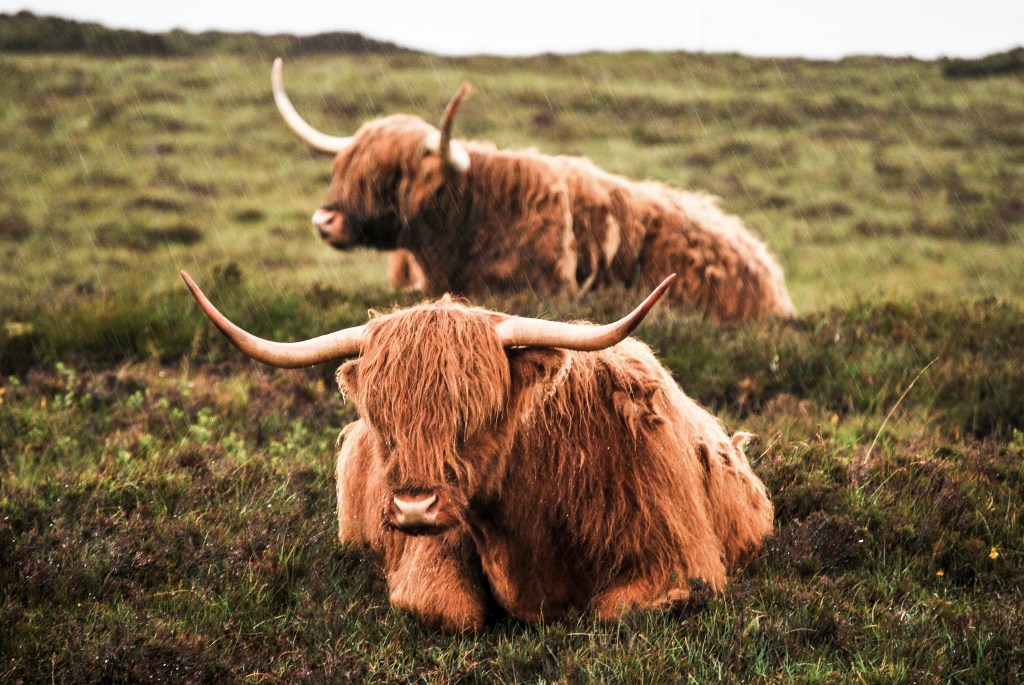
This, almost certainly, was a Highland bull, the heritage breed common among Greenlanders and prized for it hardiness. They are cold-tolerant and shaggy creatures, sporting horns reminiscent of the minotaur. So, among the Icelandic breeds of horse, goat and sheep who probably travelled with Thorfinn – the first European livestock to graze in North America – there was also a small herd of Highland cattle, and at least one bull with a bad attitude.
The voyage of Thorfinn and Gudrid is perhaps the most significant in either of the sagas, because, while it was not the first to mention the First Peoples of North America, it was the first in which these disparate societies established a dialogue, and trade. The Scandinavians shared milk, and the First Peoples shared furs and pelts.
This was an important moment – the first recorded instance of Scandinavians exchanging goods with the First Peoples – and we have good reason to believe it was not the last. An authenticated Scandinavian coin, minted sometime between 1065 and 1080 CE, was excavated at Naskeag Point, Maine, in 1957, in association with First Peoples artifacts originating as far north as Labrador, as far west as the Great Lakes, and as far south as Pennsylvania. It has been suggested that Naskeag Point was once a sort of marketplace, where different nations exchanged goods across northeastern North America, a massive network of regional trade in which visiting Greenlanders and Icelanders apparently participated. The foods this network might have brought into Scandinavian reach are enough to tease the tastebuds, and no possibility is more entrancing than maize, as yet unknown to Europeans.
Northern Flint Corn was a regular feature in First Peoples agriculture throughout northern latitudes. Jacque Cartier appears to reference fields of corn on the Gaspésie Peninsula in 1534, and Giovanni Verrazano makes a similar reference when visiting Maine the previous decade. We cannot say if Scandinavian teeth bit into Northern Flint Corn, but these Greenlanders were trading in exactly the right place, and might have been doing so for centuries.
The dialogue between Thorfinn and the First Peoples didn’t last long. Disagreements led to organized conflict, in which Thorfinn sicced his Highland bull on the First Peoples. The cattle who’d helped initiate trade also helped to end it, making much an impression in combat that Thorfinn had time to abandon Vinland forever, almost certainly without corn.
The Fall of Greenland
The eventual collapse of the Greenlander is, to this day, largely mysterious, but as in so much of human history, food may have played a central role. The Medieval Warming Period was followed promptly by the Little Ice Age (1300-1850 EC), during which Greenland’s fragile ice-free ecosystems dramatically shrank. At the same time, livestock devastated the dwarf willow and birch holding the island’s soil in place, and then ate the grass, prompting widespread erosion. Pasture, it seemed, was withering rapidly.
Little by little, livestock and their products vanished from the Greenlander diet, and their dependence on game, especially seal and walrus, began to grow. Tooth analysis demonstrates that, by the time of the last Greenlanders, their diet was effectively devoid of milk and cheese. They were no longer farmers.
“Rather than being pathologically inflexible about their diet,” wrote biological anthropologist Alice Roberts, “it seems the Greenland Vikings were trying to adapt. Whatever the reason for their abandonment of the Greenlandic colonies, it wasn’t an aversion to eating food from the sea.”
The Western Settlement was the first to go. When their eastern counterparts came to investigate in 1364 CE, they found the settlement empty, its horses, cows, goats and sheep running free. The Eastern Settlement, estimated to have collapsed around 1450 CE, likewise left no clear cause. Only a few decades later, in 1497, John Cabot would circumnavigate Newfoundland, imaging himself the first European to do so. The Scandinavian experiment in Greenland and Atlantic Canada was not brief. This semi-autonomous society of European farmers endured for almost 500 years, and casual references to them visiting North America date to at least 1347 CE. They were innovative if nothing else, continuously adapting their diet to the western North Atlantic, and, to a lesser extent, the novel foods of North America. We, like them, are grappling with how best to feed ourselves in a changing climate. Let’s hope we prove at least as flexible.
Zack Metcalfe is a freelance journalist, columnist and author based in Salmon Arm, BC.

 The Wandering Rook
Leave a comment