
Lithium-ion and sodium-ion batteries are about the same age. Both enjoyed robust research and development in the ‘70s and ‘80s, and in that time, both made serious progress toward commercialization. But lithium-ion was always the crowd favourite.
Its superior energy density – watts per unit volume or mass – was clear from the beginning, and in 1991, with the invention of the extremely energy dense Lithium Cobalt Oxide battery, there was no longer any contest. Lithium-ion wormed its way into every cell phone, laptop and electric car on the planet, while research into sodium-ion ground to a halt.
Sleeping dogs lay until about 2010, when the relative scarcity of lithium and cobalt started becoming a problem. Wind and solar farms, and commercially viable electric vehicles, demanded more batteries than existing mines could easily supply, and sodium, over a thousand times more common than lithium, came back into vogue.
“It’s funny,” said associate professor Michael Metzger, Herzberg-Dahn Chair for Advanced Battery Research with Dalhousie University. “I feel like [sodium-ion battery research] is tied to the price of lithium.”
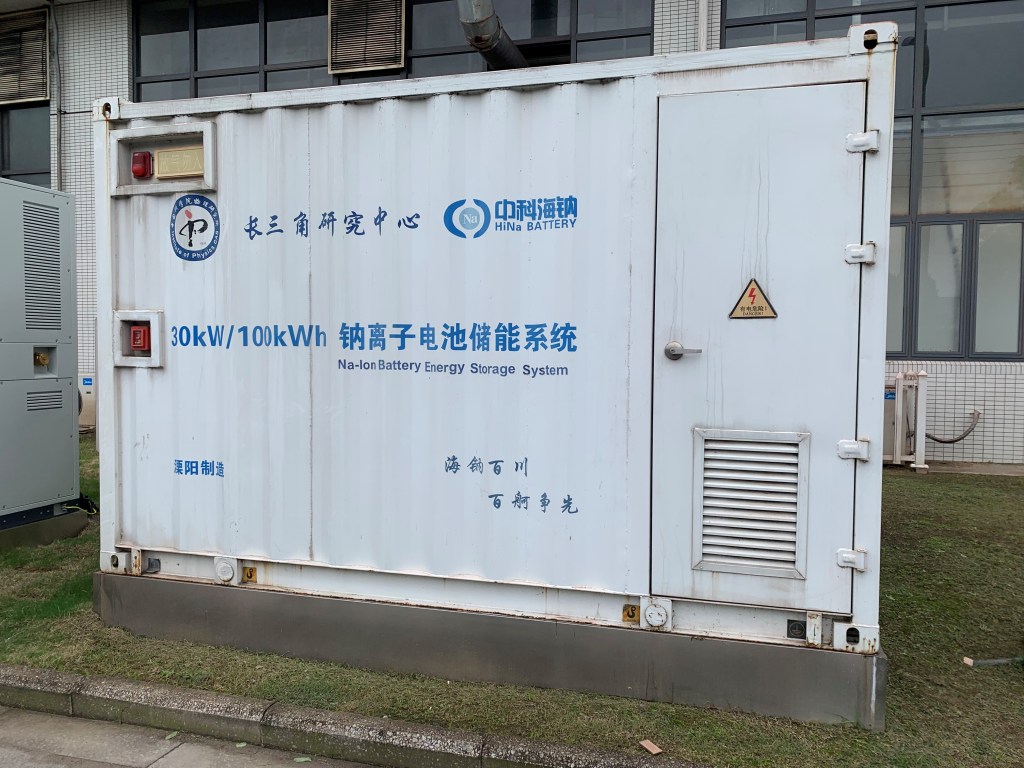
Sodium-ion batteries are named for their “charge carrier,” the specific ion (Na+) dashing from one end of the battery to the other during charge and discharge, but the rest of the battery can host a variety of materials, especially its electrodes.
Metzger’s team at Dalhousie has experimented with cathodes (positive electrodes) built from layered oxides of nickel, iron and manganese, from “prussian white” materials of iron and manganese, and from sodium-iron-pyrophosphate. The first is energy dense, the second is cheap, and the third is incredibly stable, which matters for battery lifespan and safety.
“In batteries, everything’s a trade-off,” said Metzger.
They’ve also experimented with anode (negative electrode) materials, starting out with an alloy of sodium and tin, and while it performed beautifully, tin’s expensive. Now their most promising anode is an alloy of sodium and lead, signalling a potential second-wind for the lead-acid manufacturing and recycling industry.
“Lead is really quite cool in sodium-ion batteries,” said Metzger. “It works just as well as tin, it’s way more abundant, and it’s super low cost.”
He isn’t trying to develop the “one new sodium-ion battery,” necessarily. Just as lithium-ion batteries come in chemistries like Lithium Cobalt Oxide (LCO), Lithium Nickel Manganese Cobalt Oxide (NCA) and Lithium Iron Phosphate (LFP), sodium-ion will take many different forms, and several of the innovations mentioned above are already being commercialized.
Research still has a ways to go, said Metzger. The progress of the sodium-ion battery is typically measured against LFP, the lithium-ion battery prized for its low cost, its safety, and its exclusion of cobalt. LFP is also one of the least energy dense lithium-ion batteries, great for grid-scale energy storage where size and weight don’t matter, but not so much for long range electric vehicles.
Speaking broadly, said Metzger, sodium-ion batteries only manage about 70 per cent the energy density of LFP, a number which must improve in order to compete. If it does improve, the advantages of sodium-ion over LFP could become decisive.
For one thing, sodium-ion has the potential to be much cheaper than LFP, given its use of superabundant materials. Avoiding lithium and cobalt also means avoiding associated supply chain issues. Another advantage is operating temperature. In order to run efficiently, and with minimal degradation, LFP batteries must stay below 50°C, whereas sodium-ion can operate comfortably at 70°C. So while lithium-ion wastes power and space cooling itself, sodium-ion needn’t bother.
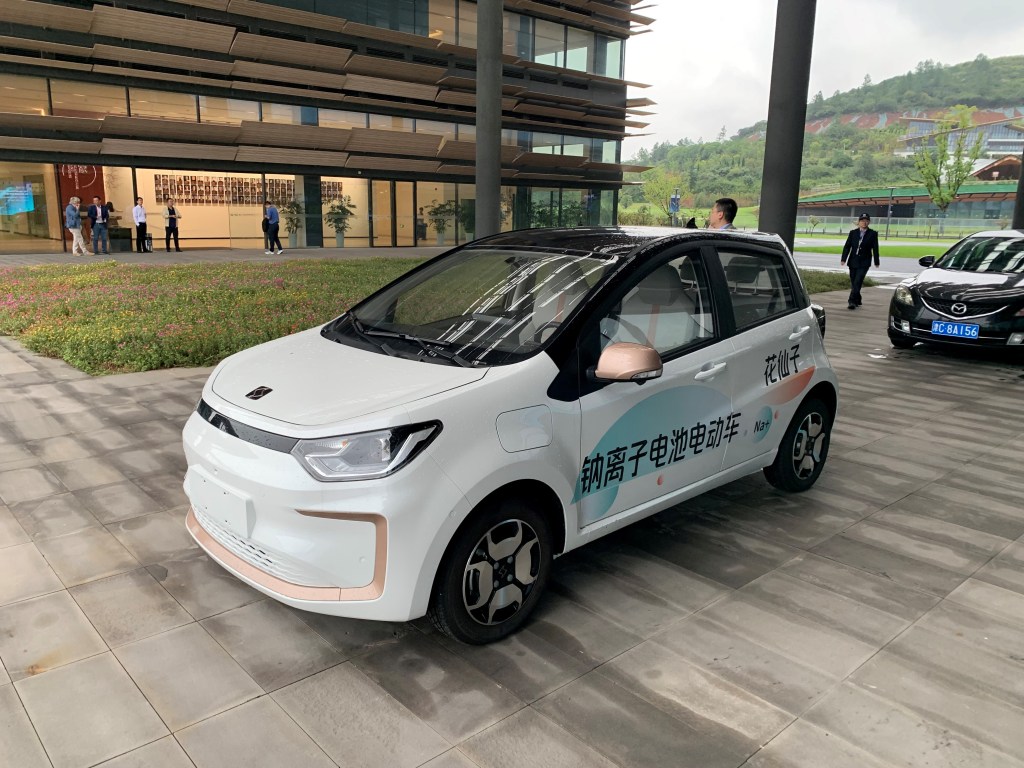
It’s for grid-scale storage – especially for wind and solar farms – that Metzger and his team are developing this technology, but elsewhere, sodium-ion batteries have already been put to unlikely use. In China, they power electric scooters, and even short range electric vehicles.
“I don’t think we’ll ever see sodium-ion batteries in long range EVs,” said Metzger, “but they could be ideal for stationary energy storage, and that market will explode in the future, at which point we’ll need something cheap and scalable, which doesn’t require scarce materials, which has stable supply chains, and which has a long lifespan. These are things I think sodium-ion can offer.”
A version of this article was originally published by Climate Stories Atlantic.





Leave a Reply