
In 1879, botanist William Beal undertook a simple experiment. In each of 20 bottles, he placed 50 seeds from 21 New England weed species (1,050 seeds per bottle) and buried them under what became the campus of Michigan State University.
The question Beal hoped to answer was a simple one – if farmers cleansed their fields of weeds every single year, how long would it take for the soil to simply run out of weed seeds? How long would it take for every offending seed to either germinated or expire? Turns out, his hypothetical farmers would be at it quite a while.
Beal’s experiment is still going. At first he dug up bottles every 5 years, testing the viability of their corked seeds in 1884, 1889, 1894 and so one, but in 1920 (the 1919 dig was postponed a year), when the 8th bottle was extracted and its seeds still viable, the interval was lengthened to every 10 years. In 1980, it was lengthened again to every 20 years.
The 16th bottle was exhumed in April of 2021 (the 2020 dig postponed by Covid) under cover of darkness, as the location of these bottles, and the privilege of digging them up, has been entrusted to a precious few researchers in the experiment’s 144 year history. Every generation waits for the first lifeless bottle, and yet the seeds keep sprouting.
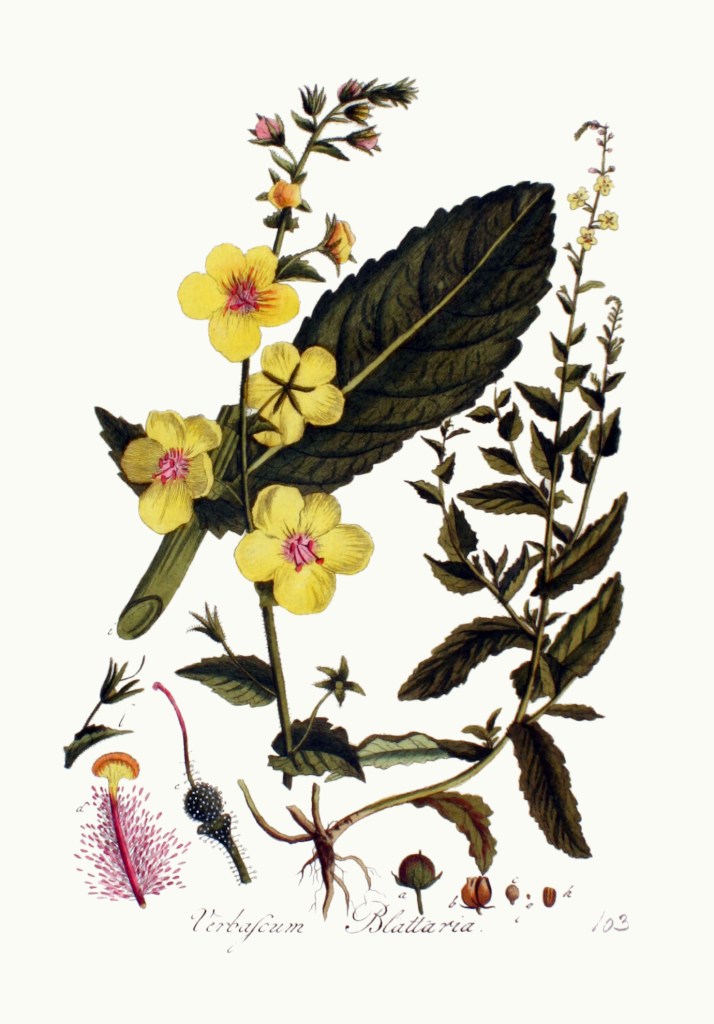
Not all of them, of course. The batch from 2021 yielded only 20 viable seeds, all from the species Verbascum blattaria – Moth Mullein to the layman – the irony being that Beal included this particular weed by accident. The 21 species he intentionally entombed, and 6 others included by mistake, have all fallen silent, some back in 1884, some as recently as 2000. If all goes well, Beal’s experiment will continue until even Verbascum blattaria refuses to germinate, or until the last bottle is excavated in 2100, a full 221 years after it was buried.
All this to say, we haven’t the foggiest idea how long a seed can last. A 1,300 year old Sacred Lotus seed (Nelumbo nucifera), recovered from an ancient lakebed in Liaoning Province, China, was successfully germinated in 1994. In 2005, several date seeds recovered from the Masada Fortress in Israel were germinated after 2,000 years of benign neglect.
The mechanisms behind seed ageing are poorly understood, but at some point – sometimes years and sometimes millennia – their delicate machinery breaks down, and germination becomes impossible. A leading culprit is oxidative damage from the slow and inevitable buildup of free radicals. Like an unridden 1941 Fargo Pickup, seeds will succumb to a sort of rust, until, eventually, the engine of germination will not turn over.
But the pace of decay depends very much on where you park the Fargo – on a museum floor or behind the barn. If kept in places cool, dry and dark, whether in a temperature-controlled seed bank or a buried storeroom overlooking the Dead Sea, seeds will age more slowly. “Low precipitation at Masada may have contributed to the seed’s exceptional longevity by minimizing free radical generation,” suggests a 2008 paper on the aforementioned dates, published in the journal Science. While an exceptional case, the Masada dates were preserved for millennia entirely by accident, which begs the question, how long might seeds be preserved on purpose?
“When we store seed at -20°C,” said Donnie McPhee of the National Tree Seed Centre in Fredericton, “that seed’s still alive. Things are still happening, but at a very slow rate. If we do our job properly, collect at the right time, dry it down correctly, store it, there’s no reason we couldn’t be looking at 50-100 years. We’ve had seeds stored 60 years that still have over 90 per cent viability.”
But storage potential depends very much on the species. The National Tree Seed Centre is responsible for the 700 plus tree and shrub species of Canada, presently storing about 227 of them. Among these are “orthodox” seeds, such as pine and spruce which can be dried and frozen comfortably, and “recalcitrant” seeds, like the large and fleshy nuts of oak and hickory which cannot tolerate extremes of dry or cold. In case of recalcitrants, their embryos must be extracted and stored in a bath of liquid nitrogen, an elaborate and time-consuming process which can nevertheless preserve the embryo for centuries.
“In liquid nitrogen,” said McPhee, “you’re basically stopping all cellular processes. Based on the best science, it should last hundreds of years.”
The Longevity of Cultivars
Unlike in conservation, where seed storage deals in decades, the vast majority of agricultural seed is banked only a few years, if that.
“A lot of our crops aren’t going to be stored year over year,” said Andrew McKenzie-Gopsill, research scientist with Agriculture and Agri-Foods Canada. “I don’t believe I’ve ever purchased seed except that was produced in the previous year.”
Cultivars like corn and soybean won’t maintain adequate viability in storage more than a year or two, said McKenzie-Gopsill, and even if they did, seed producers are constantly retailoring their genetics, so seed on the shelf, even perfectly viable seed, becomes obsolete in those one or two years. In the case of some winter cereals, the seed is harvested, packaged, sold and planted within two months, with minimal if any storage.
It’s not that cultivars have especially poor longevity when compared to, say, weeds, only that seeds certified for sale by the Canadian Seed Grower’s Association must maintain 95 per cent viability (the percentage of seeds expected to germinate when planted). Seeds from a common Maritime weed like lamb’s quarters (Chenopodium album) lose about 50 per cent viability per year spent in the soil. They overcome this obstacle by producing 70-100 thousand seeds per plant. Half of 100 thousand is still a lot of seed. In fact, this particular weed was among those accidentally included in Beal’s bottle from 1920, its two lamb’s quarters germinating effortlessly after 40 years in their glass cage.
While the scale of seed storage differs enormously from one operation to the next, said McKenzie-Gopsill, storage conditions are fairly uniform – cold, dry and dark. The idea, he said, is to deprive seeds of any stimuli that might trigger germination, keeping them and their internal machinery in a sort of stasis, like tiptoeing around a hibernating bear. The storage conditions he’s most familiar with – maintained in the seed banks of the University of Guelph – are 4°C with humidity below 15 per cent, lights out and curtains drawn. He’s seen these same conditions hold more or less true in the corn storage facilities of Pioneer Seeds, enormous barns distinguished from other banks only their capacity, and the need to move product in and out by conveyer belt.
An exception to the breakneck turnover of the seed industry is the Svalbard Global Seed Vault in Sweden, built into the side of a mountain with the express purpose of storing seed from all the world’s agricultural crops. Their capacity, of 4.5 million individual samples totalling 2.25 billion seeds, isn’t even a quarter full. It’s there, said McKenzie-Gopsill, that the longevity of agricultural seed is being pushed to its limits, in an ongoing effort to safeguard the planet’s food supply.
At -18°C, inside four-ply foil packages, themselves sealed in boxes, Svalbard expects to preserve the viability of its seed for centuries, renewing as necessary, but since the longevity of cultivars on ice has never been tested on those timescales, they’ve launched one of the most comprehensive studies of the subject since Beal. In 2020, they took seeds from barley, pea, wheat, lettuce, rice, corn, chickpea, soybean, groundnut, pearl millet, pigeon pea, cabbage and timothy into their vault, and stored duplicates of each in liquid nitrogen at the Leibniz Institute of Plant Genetics and Crop Plant Research in Germany. In 100 years (2120), the two groups of seed will have their viabilities compared.
“This experiment is one of its kind,” said Åsmund Asdal, Seed Vault Coordinator at the Nordic Genetic Resource Center. “It will provide future generations with valuable information about seed viability and more precise knowledge of how often seeds need to be regenerated.”
The experiment will end only 20 years after Beal’s, and have lasted less than half the time.

Magic Beans
Owen Bridge’s seed career began around age twelve, while growing up in Qualicum Beach, Vancouver Island. He had an affinity for hummus, and decided to grow his own chickpeas, purchasing his first batch from Salt Spring Seeds in the nearby Gulf Islands. Eventually he met the company’s owner, Dan Jason, and received from him three heirloom varieties of bean – Kodiak Pinto, Uncle Willie’s and Stevenson Blue Eye.
“He told me how it’s up to gardeners and small farmers to keep some of these rare varieties alive, or else they’ll go extinct” said Bridge. “I thought it was so cool. There are not many things a kid can do to make the world a better place.”
Within four years, Bridge’s crops had filled his parents’ garden to capacity, at which point they spilled into his grandparents’ yard across town. When it came time to pack up and move to the family’s new home in Middleton, Nova Scotia, Bridge was growing over 50 different varieties of seed, all of whom came across country, and performed remarkably well in a Maritime climate.
In 2008, while still in high school, Bridge established Annapolis Seeds, which now sells over 600 plant varieties, most grown on the family farm in Middleton (which he’s since bought from his parents). The rest come from like-minded seed growers across Nova Scotia.
“I’m still growing Kodiak Pinto and Uncle Willie’s,” said Bridge. “I’ve lost track of Stevenson Blue Eye. Not sure what became of that one.”
Bridge’s approach to seed storage is simple and effective. He seals seed in plastic bags with silica moisture absorbers (jars proved too cumbersome), names and dates each bag, then organizes them into plastic totes. The room in which the totes are stored has two windows, one equipped with an air conditioner, the other a dehumidifier. Together they keep the room relatively cool and relatively dry, but not overly so. Temperatures might hover in the low teens, what Bridge called a “cool room temperature,” and, “a nice place to spend a hot day.”
“Ideally, in the next couple years, I’d love to have a proper walk-in cooler,” said Bridge. “I’ve seen bigger seed companies in my travels, and they have insulated, walk-in fridges basically. That’ll keep it actually cold, like 3°C or 4°C.”
For now, his straightforward setup has proven more than adequate. Parsnips and carrots produce famously short-lived seed, in the range of one or two years, while beans and peas can stay viable up to three. Squashes keep three or four years, while cucumbers, tomatoes and cabbages can last over a decade.
“I’ve planted tomato seeds – just for our own use – that are 10 or 15 years old, and they’re still germinating at 95 per cent,” said Bridge.
Not that he’d sell seed that old. Bridge subjects all his seed to a germination test each December – folding it in wet paper towel, sealing it in a bag and placing it in an unplugged fridge equipped with heating pads – but even if the seed performs well, anything older than a year or two is typically used on the farm, or else donated. This is a rare conundrum, however, as Bridge tends to sell out his inventory every year.
The germination test, or “germ test,” is by far the most commonly used method of gauging seed viability, but there are others. Bourlaye Fofana, a research scientist with Agriculture and Agri-Foods Canada, makes special mention of autofluorescence-spectral imaging, in which seeds are bombarded with ultraviolent light to excite sensitive compounds within. These compounds respond with light of their own (fluorescent light), which is photographed to determine their quantity and distribution. With this information, the viability of seeds can be accurately guessed.
Autofluorescence-spectral imaging has its advantages, said Fofana. For one, 50 seeds can be scanned together in a petri dish without preparation of any kind, or damage to the seed. Scans are also quick. The drawback, however, is that the necessary equipment is bulky and expensive, right at home in a research lab, but perhaps not at scale in the seed industry.
Other approaches rely on chemistry, testing seeds for the presence or absence of certain active enzymes, or for living tissue which will uptake dyes. These include the tetrazolium test, fluorescein diacetate test and Evans blue dye test, all of which are still commonly used. A final method, x-ray testing, maps a seed’s internal structure and estimates viability from there, but is less practical and rarely used. Bridge, for his part, is content with his unplugged fridge.
The latest ambition of Annapolis Seeds is “pre-stratification” – subjecting seeds to a simulated winter, which many perennial species require before they’ll germinate. This is particularly true of edible tree nuts, like Bur oak and American chestnut, which Bridge hope to include in his catalogue.
“We’re experimenting this year,” he said. “What I’d like to start doing is stratifying these perennial seeds ourselves, then send them out, ready to plant. I don’t know what that’s going to look like, but I’ve gotten obsessed with nut trees lately.”
Zack Metcalfe is a freelance journalist, columnist and author based in Salmon Arm, BC. This article was originally published with Rural Delivery Magazine.




 The Wandering Rook
Leave a comment