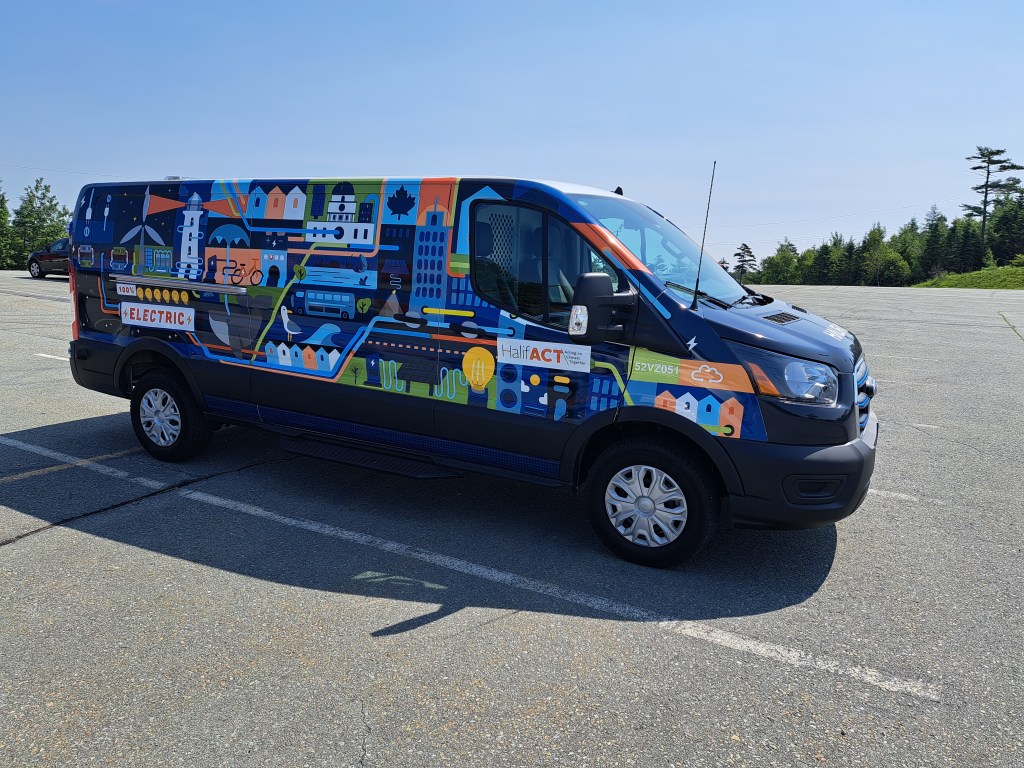
By 2030, all 500 or so light duty vehicles owned and operated by the Halifax Regional Municipality – everything from police cruisers to pickup trucks – will be electric. At least, that’s the plan.
“We’ve got six years left,” said Kevin Boutilier, manager of clean energy with the HRM. “We’ve also got a lot of momentum, and a lot of support in terms of funding.”
This funding comes from the Climate Action Tax, instituted in the 2022-2023 fiscal year and bringing in $18 million annually, roughly $3 million of which is earmarked for fleet electrification. Money’s not an obstacle, but the market is.
“We’ve found it very difficult to actually source electric vehicles,” said Boutilier. “We put tenders out and some come back with nothing.”
EVs, he said, are in such high demand and short supply that many dealerships prefer selling them piecemeal, rather than engaging in an onerous tender process. So while Boutilier and colleagues are putting a lot of effort into pairing the right EVs with the right municipal departments, they’re also restrained by what’s available. So far they’ve acquired 30 EVs with an additional 30 on order, including Ford’s E-Transit Van, Mustang Mach-E and F-150 Lightning, and Hyundai’s electric Kona and Ioniq.
“I’m very optimistic,” he said. “I feel like 2030’s within reach.”
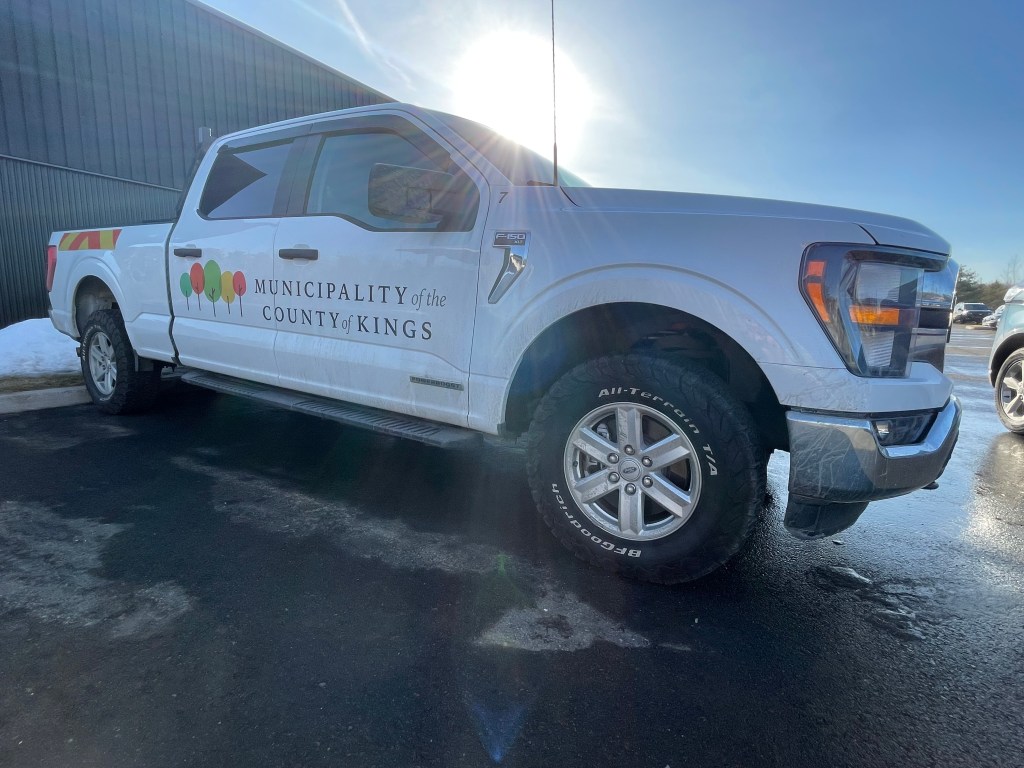
The HRM is not alone. The Municipality of the District of Lunenburg (MODL) also aims to electrify its light duty fleet by 2030, and has already acquired two Volvo XC40s, two Ford F-150 Lightnings and one Ford Mustang Mach-E, most employed in their Building and Fire Inspection Services. Seven additional EVs have been included in their five-year capital investment plan, which should be enough to meet their 2030 target.
“We have to be innovators,” said Kacy DeLong, MODL council member for District 8. “At this stage in the climate crisis, if we’re not part of the solution, we’re not doing our jobs.”
The Municipality of Colchester has committed to an entirely electric light duty fleet by 2035, a fleet which is, at present, composed exclusively of half-ton and three-quarter-ton trucks, 21 in total. Like their neighbours in the HRM, they’ve found the market difficult to navigate. EVs can take months and sometimes years to order in, delays which have proven prohibitive every time a truck’s needed replacing.
“That’s been a bit of a barrier,” said Joanna Burris, Colchester’s sustainability planner. She hopes to surmount this barrier with an EV purchasing policy, empowering the municipality to order replacement EVs far in advance of an expected replacement. That way the new EV will be present and accounted for when an existing Dodge Ram 1500 or Chevy Silverado 2500 kicks the bucket.
“It hasn’t worked to buy them casually,” said Burris. “We really need a policy.”
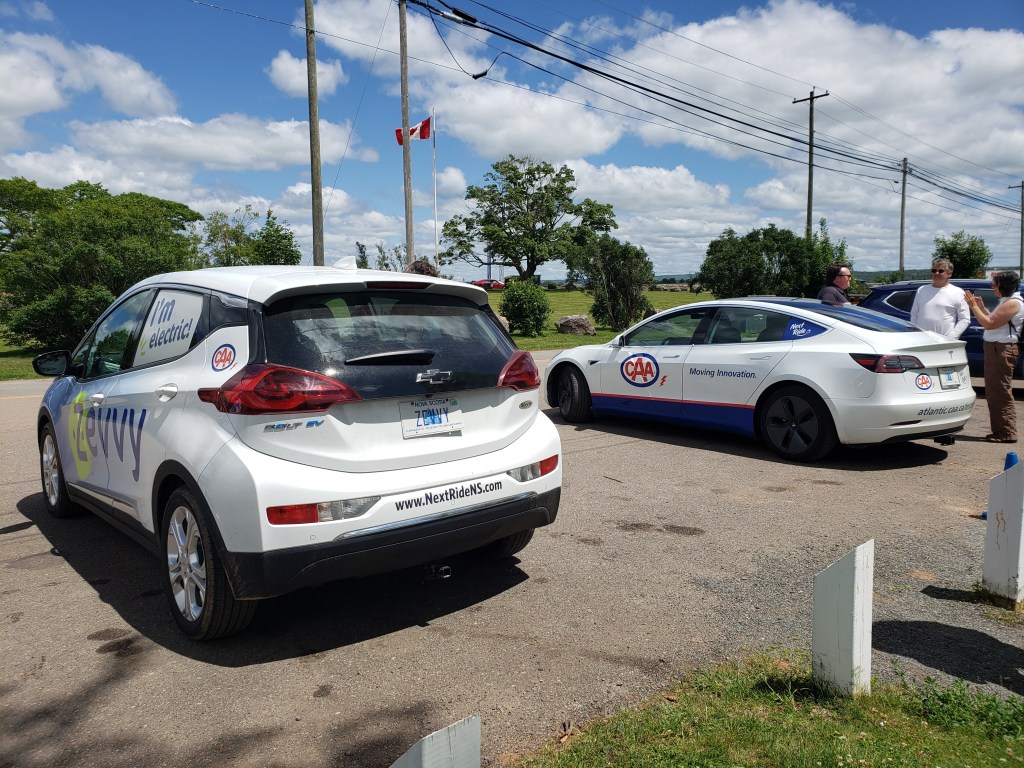
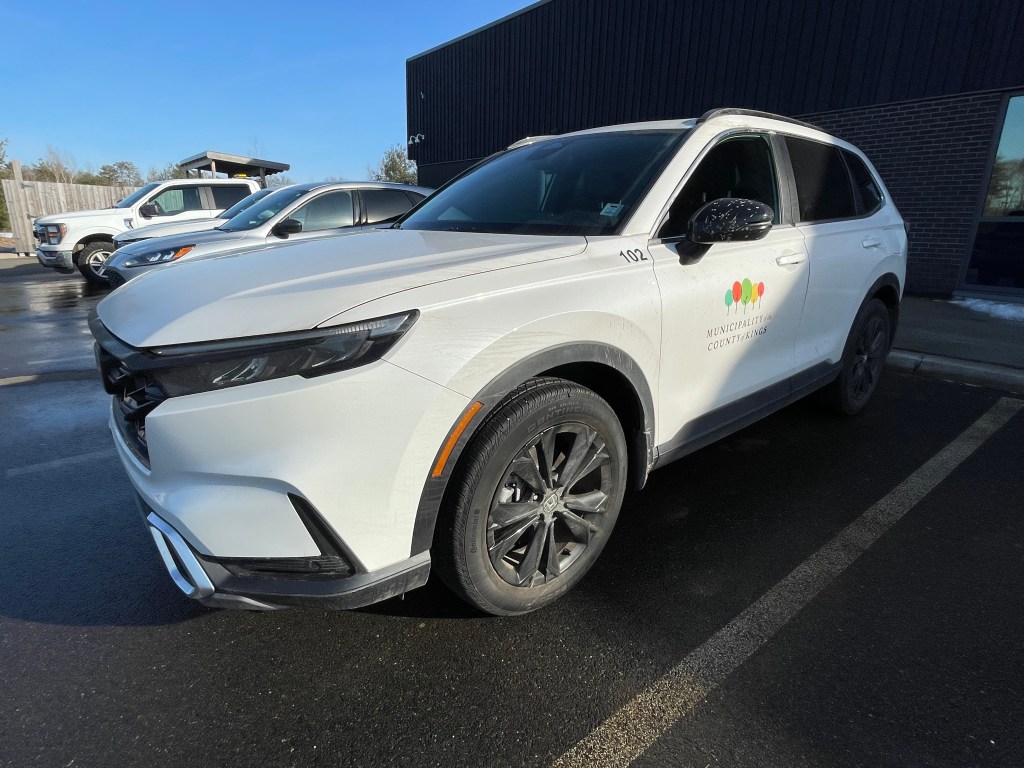
The County of Kings is approaching their transition more flexibly. Instead of establishing deadlines, they’ve simply committed to buying the “greenest” option available when sourcing new vehicles. In the absence of sufficient charging infrastructure across the county, that’s meant hybrids, such as the Honda CR-V, Mazda CX-90 and Ford F-150. Five such hybrids have already entered the fleet, and unlike EV equivalents, were relatively easy to source.
“Once we have the charging infrastructure, we’re going to be shifting from hybrids to EVs,” said Dr Zobia Jawed, director of Environmental Services and Climate Resilience. She expects this shift in 2025.
Cape Breton Regional Municipality, unlike the rest of Nova Scotia, is starting with its largest vehicles and working its way down. An influx of international students to Cape Breton University, Sydney, has increased demand for public transit, and the municipality figured if it was buying new buses, they might as well be electric.
“We see battery electric buses as the best way to meet the current and future demand for transit in our area, while at the same time reducing our greenhouse gas emissions,” said Raymond Boudreau, senior manager of public works with the municipality.
By 2040, and with a blend of federal, provincial and municipal dollars, they plan to electrify their entire fleet of 23 buses, with an initial purchase of six buses planned for 2027. They haven’t yet settled on a make and model, but the estimated cost will be $800,000-$1.1 million per bus, depending on range.
Electrification is sweeping Nova Scotia, but Halifax remains the largest player in both budget and ambition. On the same deadline as its light duty fleet, the HRM has committed to electrifying heavy duty equipment like snowploughs, and in this Kevin Boutilier is less optimistic. To his knowledge, no one’s manufacturing electric snowploughs.
“We’re keeping our eyes on the market,” he said.
Public transit is a different story. The HRM has 60 electric buses on order from the Quebec company Nova Bus, with delivery expected this fall, but on March 4th of this year, they announced a bigger project still – the construction of a new highspeed ferry terminal adjacent to the chronically congested Bedford Highway (Mill Cove), which will connect Bedford to downtown Halifax via five electric ferries. It’s an initiative to cut carbon and traffic in a single stroke, and is expected to come online in the 2027-2028 fiscal year.
“We might be a speck on the map,” said Boutilier, “but we have a responsibility to do everything in our power and fiscal resources to decarbonize, and make our city more resilient.”
This article was originally published with the Climate Story Network.




 The Wandering Rook
Leave a comment