
In July of 1914, ornithologist Arthur Cleveland Bent crossed the 30 kilometres of ocean between mainland Nova Scotia and Seal Island to the south. Long, lean and lonely, this is one of the remotest places under provincial jurisdiction. Generations of people found their home here. Generations of sailors found their grave. Arthur Cleveland Bent found petrels, and lots of them.
Small, with plain plumage and kittenish calls, the Leach’s Storm petrel would be an unremarkable seabird if it weren’t one of the most successful on the planet. As a species, it’s native to just about every stretch of ocean in the northern hemisphere, Atlantic or Pacific, and when it comes ashore to nest, its colonies can number in the millions.
It was, probably, just such a mega-colony encountered by Bent. “The ground,” he wrote, “was fairly honeycombed with their burrows,” and not only in the soft soils of shore, but throughout the island’s forested interior, seabirds undermining root and stump. Modern ornithologists speculate this was one of the largest colonies of Leach’s Storm petrel in the Atlantic Ocean, if not the world. It would make an impression on Bent, for its size, and for its fragility.
While ashore, admiring birds and nests, he became acquainted with the lighthouse keeper’s Newfoundland dog. Apparently for pleasure, this lone canine dug seabirds from their burrows and killed them with a few decisive chomps, then moved on to the next, day after day, week after week, summer after summer, destroying burrows and birds in an endless trail of carnage and upturned soil. The dog wasn’t eating petrels, merely executing them, and it did so until there were no petrels left.
“After a few years of this persistent hunting,” wrote Bent, “I learned that this large and populous colony had been practically exterminated.”
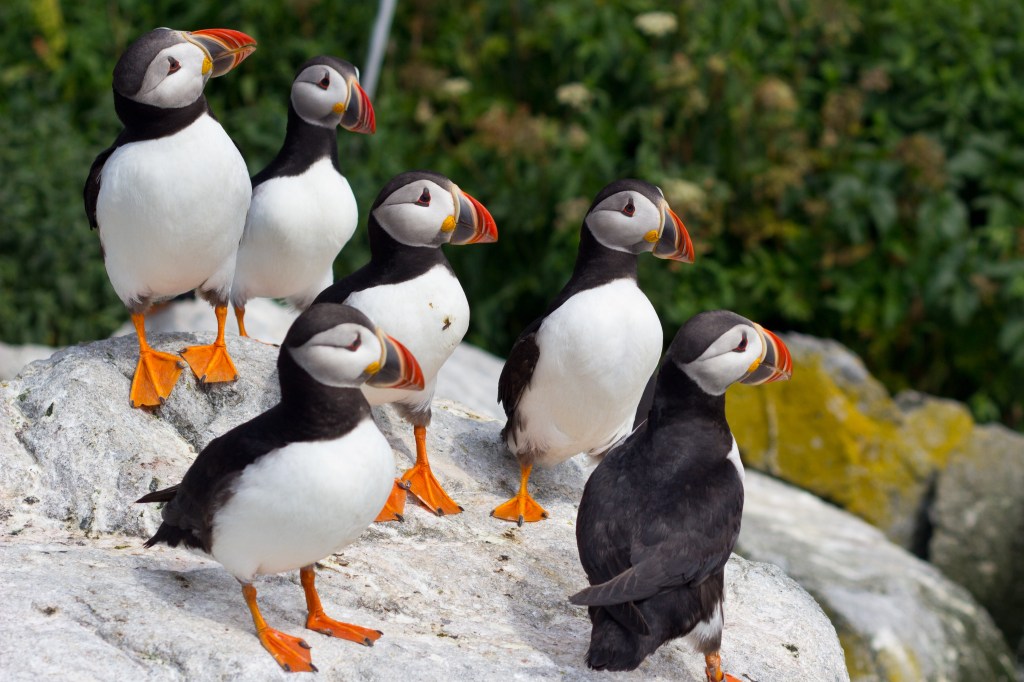
It might seem ludicrous to lay this crime at the paws of a single Newfoundland dog, but Bent would describe an identical slaughter on Machias Seal Island, New Brunswick, in the Bay of Fundy (not to be confused with Seal Island, Nova Scotia), where a single dog all but obliterated nesting seabirds. Bent himself witnessed the “extermination” of Leach’s Storm petrels among the Bird Rocks, in the heart of the Gulf of St Lawrence, by a single cat.
“The gentle petrels,” he lamented, “have many enemies that attack them on their breeding grounds, where they are easily dug out of their burrows in the soft ground and are too stupid to escape.”
Seabirds are masters of ocean living, and spend the majority of their lives beyond the continental shelf, but when they come ashore to nest, their pelagic prowess abandons them. While exquisitely adapted to the perils of the sea, they make poor landsmen, unable to defend themselves from mammalian predators like an off-leash Newfoundland dog, or even from herbivores who might trample their nests or graze away their habitat. They are “too stupid” to breed on any continent, so they do away with continents altogether.
“Remote islands have a unique ecology,” said biologist Ian Jones of Memorial University, Newfoundland, “because dispersal onto them and off of them by organisms is highly restricted.”
Such islands, isolated from continents for millennia or more, are settled only by species who can bridge the gap – buoyant seeds on ocean currents, insects and lichens carried in jet streams, swimming reptiles like turtles and lizards, and especially by seabirds. Together they form oceanic ecosystems largely free of terrestrial mammals, such that even the smallest islands beget millions of seabirds.
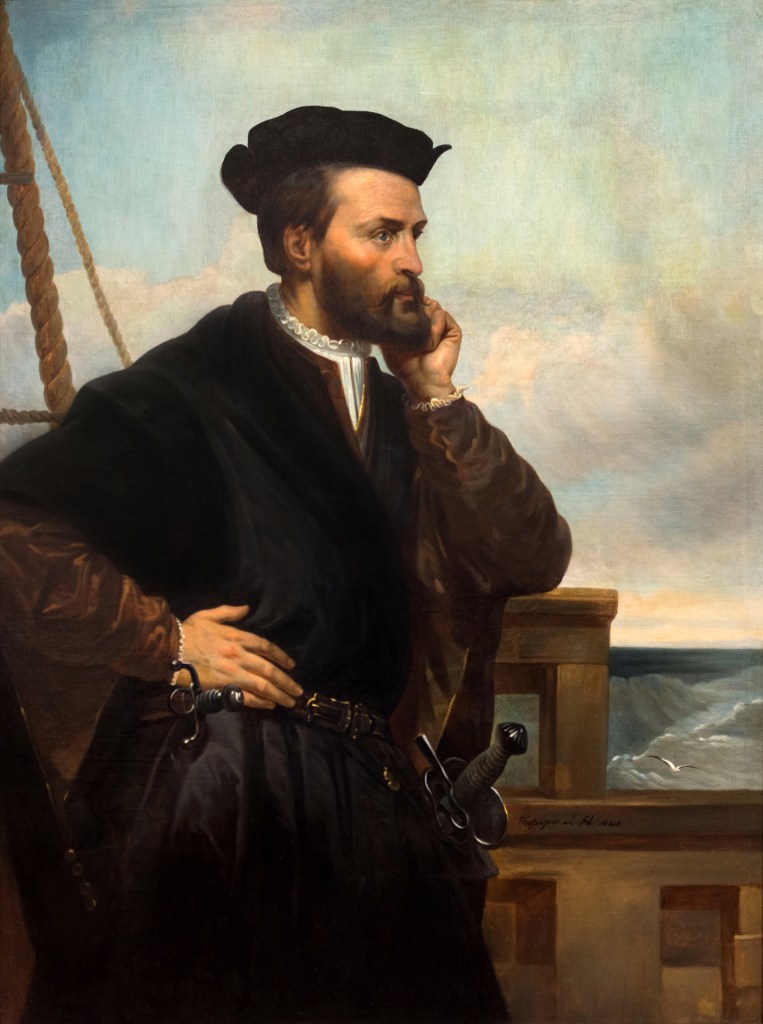
On May 25th, 1534, Jacque Cartier gives some of the oldest surviving accounts of the remote islands of Atlantic Canada. “Our two longboats were sent off to the island to procure some of the birds, whose numbers are so great as to be incredible,” he wrote of Funk Island east of Newfoundland, an aircraft carrier of rock 800 metres long. “This island is so exceeding full of birds that all the ships of France might load a cargo of them without one perceiving that any had been removed.”
Of the Bird Rocks (later to host that murderous cat) he gawked again at the fecundity of seabirds on so little land. “These islands were as completely covered with birds…as a field is covered with grass.”
These sentiments were repeated by Samuel de Champlain, who sailed through the Tusket Islands of southern Nova Scotia on May 20th, 1604. “There is such an abundance of birds of different sorts,” he wrote, “that one could not imagine it.”
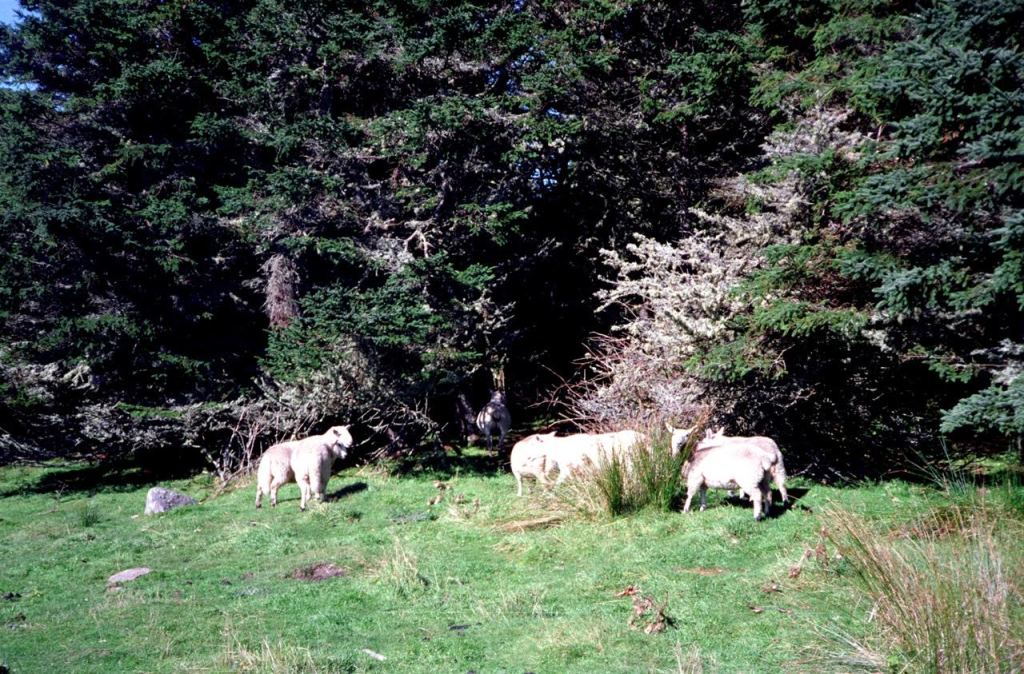
But imagine it we must. A remote island is like an unopened letter – you can’t know what is has to say without breaking the seal. Human beings are often the first terrestrial mammals to settle these islands in force, and we rarely come alone, spoiling isolation with an influx of mainland species. Many of the Tusket Islands admired by Champlain now support herds of sheep. Hay and Kent islands, in the Bay of Fundy, had their vegetation obliterated by Snowshoe hares in 1959, “moving through the understory like lawn mowers,” in the words of biologist Nathaniel T Wheelwright. English draft horses are slowly desertifying Sable Island on the extreme edge of the Scotian Shelf, and Funk Island, “whose numbers are so great as to be incredible,” lost its signature species – the now extinct Great auk – to invasive Homo sapiens.
“There are no islands in Atlantic Canada that are really intact,” said Jones. “Where you see the introduction of mainland species onto these remote islands, seabirds disappear.”
People no longer live on Seal Island, and neither do their dogs, but a long and dynamic human history left many mainland species behind, like sheep, muskrat, Red squirrel, Painted turtle, Snowshoe hare and Brown rat, each imposing different pressures on a severely disturbed ecology. Bent’s 1914 colony of Leach’s Storm petrels has never come back, and petrels at large – modest masters of the sea – are in universal decline.
“They’re on their way out,” said Jones.
The Best Kept Secret in Conservation
Sometime in the 1780s, a Japanese ship ran aground on the remote island of Hawadax deep in the Aleutian Chain, where the North Pacific Ocean becomes the Bering Sea. The crew was lost, but human beings weren’t the only mammals aboard.
Rats might be the single most destructive stowaway in the history of remote island navigation. Ubiquitous, resourceful and prolific, they’ve been accidentally introduced to over 90 per cent of the world’s islands, devastating seabirds more completely than any Newfoundland dog. The most notorious of these – the Norway rat – feeds upon eggs, chicks, and even adults, and self-restraint is not among its virtues.
When seabirds are nesting, and chicks are abundant, the Norway rat slaughters them continuously, stacking dead birds, young and old, into large, macabre piles for later consumption, and rarely eats them before the bodies begin to rot. 95 per cent of all avian extinctions have occurred on remote islands, and the wasteful voracity of the Norway rat is especially culpable.
It was the Norway rat who survived the Hawadax shipwreck, and who ruled the island so completely for 200 years that its traditional Aleutian name fell out of use. In time it was rechristened “Rat Island,” and Rat Island it was.
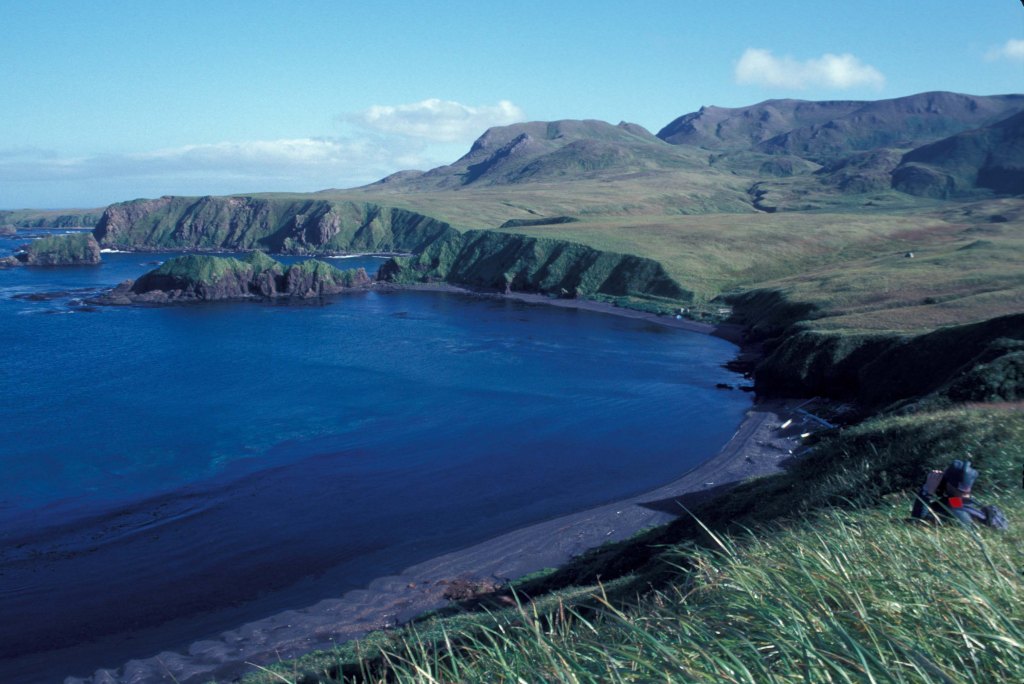
The Aleutians are known for the cacophonous roar of their nesting seabirds, a riot of voices so intense that visitors often find it deafening, but Rat Island fell silent. Not only did its seabirds disappear – except for those resorting to cliff and cave – the island’s lush vegetation became a uniform, rolling meadow, the omnivorous rats sparing neither seed nor shoot.
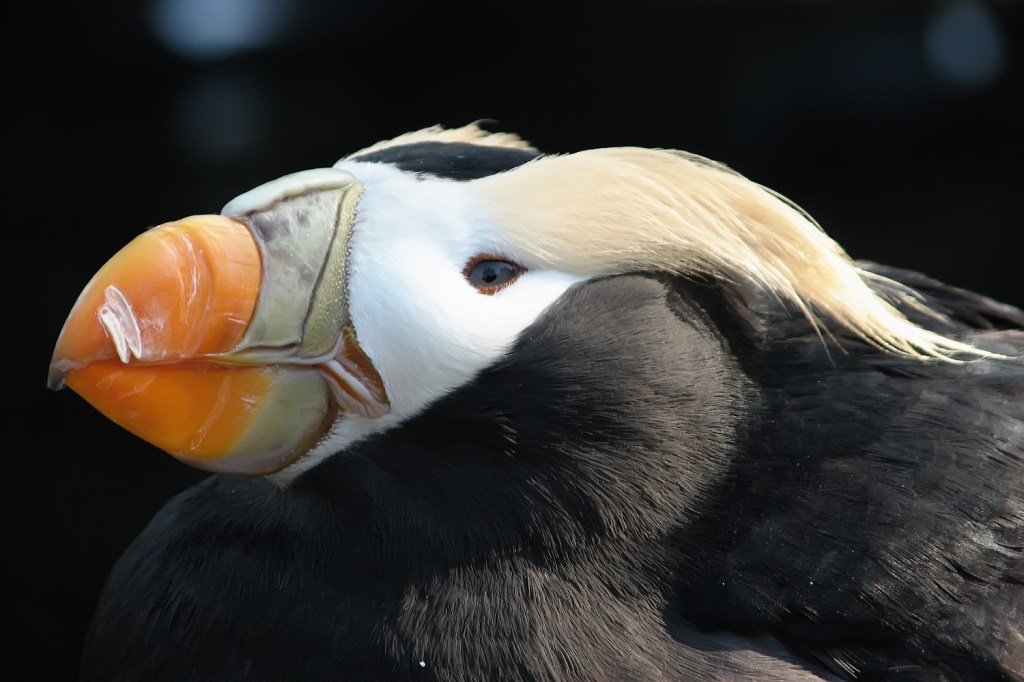
This silence was broken in early September of 2008, not by seabirds, but by helicopters, raining rodenticide pellets into every conceivable corner of Rat Island, their colour, smell and flavour specially tailored to attract the Norway rat. These rats are especially hungry in the shoulder season, so each and every one devoured pellets with short-lived relish. Five years later, Coral Wolf become the first in living memory to find Tufted puffins nesting on Rat Island.
“The species was known to nest there from the subfossil record,” said Wolf, “but to get there and be the first ones to find them nesting after they’ve been absent for a really long time…it’s pretty special. Those tangible island changes are so exciting to find.”
Wolf is the conservation science program coordinator for Island Conservation, an international non-profit whose mission is the restoration of remote island ecology via the removal of introduced species. To date, they’ve completely restored 70 remote islands internationally, with another 10 awaiting confirmation, and Rat Island was one of the more educational.
Following the removal of rats, seabirds returned in force – Whiskered auklet, Parakeet auklet, Crested auklet, Rock sandpiper, Pigeon guillemot, Common eider, Red-Faced cormorant, Gray-Crowned Rosy finch, Black oystercatcher, Glaucous-Winged gull, Giant Song sparrow, Lapland longspur, Snow bunting, Leach’s Storm petrel and, in 2013, Tufted puffin – and so did the island’s vegetation, no longer grazed down by starving rats, and freshly fertilized by defecating seabirds. The intertidal zone underwent a similar renewal, as seabirds preyed upon overpopulated invertebrates, allowing the recovery of overgrazed coastal algae. Some native birds died when feeding on freshly poisoned rats – Bald eagles specifically – but their loses were mitigated with planning, and recouped several times over in the absence of rats.
“The islands can be completely different [post-eradication,]” said Wolf. “They look different, they sound different, they smell different. It’s the best part of my job.”
These “passive recoveries” are often profound, and when they include the nesting grounds of red-listed species, declines are often arrested or reversed. The Peruvian Diving petrel, Pinzón Giant tortoise, Scripps murrelet, Island Night lizard and Seaside cistanthe were all downlisted on one red-list or another, while other species came back from the dead.
When goats were removed from Guadalupe Island, Mexico, six species of extinct plant were promptly rediscovered, and when rats were removed from Rábida Island in the Galápagos Archipelago, an endemic species of gecko – known only from 5,000-year-old subfossils and presumed extinct – was found alive and well, repopulating in the absence of introduced predators.
“Be prepared to be surprised,” said Gregg Howald. He received this nugget of wisdom early in his island restoration career, first with Island Conservation and then with Coastal Conservation – a similar enterprise specific to coastal British Columbia and the Pacific Northwest. Howald’s considered one of the foremost island restoration experts on the planet, and has, indeed, been surprised.
On the Pacific atoll of Palmyra, he recalls, the eradication of Norway rats was followed by the mysterious disappearance of an invasive mosquito. As it would turn out, this mosquito was mammal dependent, and without rats, there weren’t enough mammals left to support them. The eradication of rats also came with the unforeseen recover of Pisonia grandis, a native tree of vital importance to nesting seabirds.
“Within six weeks of rat eradication,” said Howald, “the forest floor began popping – and I mean popping – with seedlings of Pisonia grandis. The rats had been there for so long, and the ecosystem had been so degraded, that we had no idea the rats were impacting the Pisonia forest.”
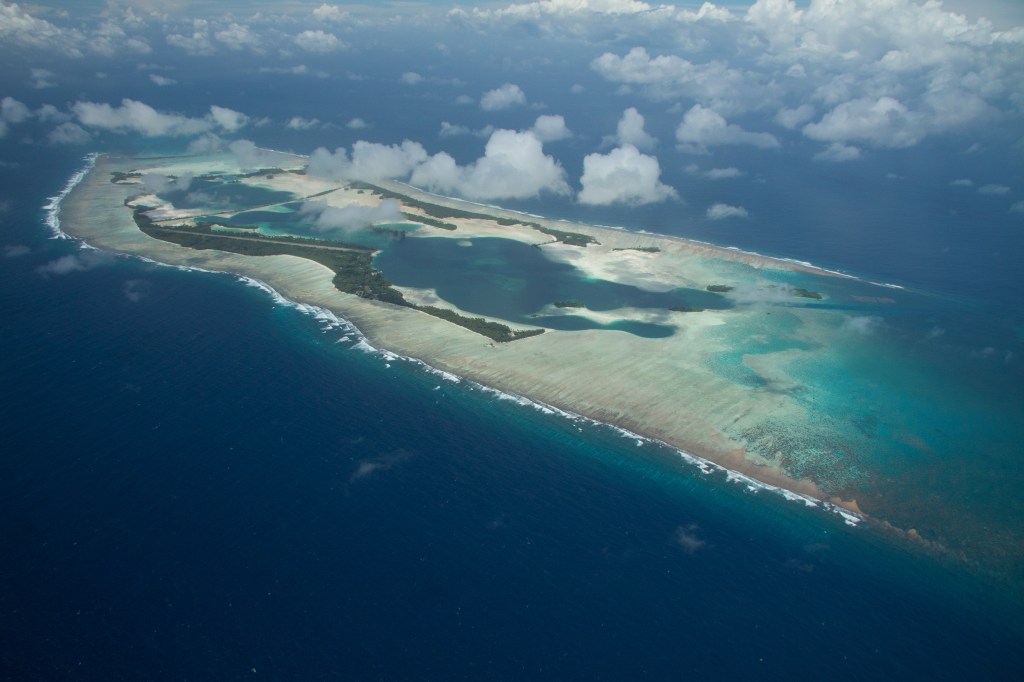
People have surprised him too, for better and for worse. Howald played a crucial role in the restoration of Rat Island in 2008, and was astonished and charmed by the Aleutian people, who insisting this island once again be called Hawadax following eradication. This request came from a cultural connection to the island so old and dormant, said Howald, that neither he nor the US federal government – who formalized the name change – saw it coming.
On the other extreme, he’s been surprised by the vehemence of public opposition to some island restorations. In the 1990s, when Island Conservation began work on the Channel Islands of California, opposition to the removal of rats was so contentious that Island Conservation worked under armed guard.
“At the end of the day,” said Howald, “I was literally looking under my car.”
Opposition tends to focus on the use of poison at scale, the death of target and non-target species, and the contention that introduced species “belonged” on the islands they now occupied. Working through these concerns and arriving at a community census can make relatively simple eradications take several years, said Howald, but engagement of this kind, he insists, is where all island restorations need to start, and where he now focuses the majority of his time.
“We can get rid of our introduced rats,” he said, “but there’s a nasty necessity that comes with it [rodenticide], and that’s where the community starts to split. There’s no other way to do this work, and it really forces a values discussion.”
Howald’s goal when speaking with communities is not necessarily to change anyone’s mind. It’s to open a dialogue and keep it open until an informed decision is reached, and not merely informed by him. People with personal connections to these islands understand their value and history better than he can, and ecology, he said, it not the only perspective to be considered.
“This is a process of discovery that we’re going to go through together,” said Howald. “We don’t know where this conversation is going to end, but when we go into this conservation, we finish it. By the end of it, you’ll know what I know, and I’ll know what you know, and if you, as a local community, still want invasive species on the island, we’ll move on. But you will also understand the trade-off you’re making.”
Restoring the Seal
Island restoration is not a new science. It’s been championed in one form or another in places like New Zealand since the 1950s, but of the 800 plus islands restored globally, only one has been in Atlantic Canada – Kent Island in the Bay of Fundy, its introduced hares removed in 2007.
“The post-hare changes on Kent Island are definitely not nuanced,” said biologist Nathaniel T Wheelwright. “Areas of the island that have been treeless since the late 1950s now have dense thickets of young trees, some as tall as 20 feet.”
But the impact of hares on seabirds is indirect, and the decline of regional seabirds is so pronounced that this modest project hasn’t triggered sweeping recoveries. Atlantic Canada remains without its signature project, and Ian Jones has just the candidate.
“Seal Island is the low hanging fruit in Atlantic Canada,” said Jones.
The Leach’s Storm petrel was listed vulnerable by the International Union for the Conservation of Nature in 2018, following an estimated global decline of 30 percent or more between 1977 and 2016. The petrels of Atlantic Canada – which represent the vast majority of petrels in the Atlantic Ocean – were listed threatened by the Committee on the Status of Endangered Wildlife in Canada following a 53.8 per cent decline between 1974 and 2018.
There are multiple reasons for this, said Jones, but a paucity of suitable nesting grounds has left more and more petrels dependent on fewer and fewer islands. 86 per cent of the 5.3 million Leach’s Storm petrels nesting in Atlantic Canada do so on only three – Gull, Great and Baccalieu in southeastern Newfoundland. The largest of these – Baccalieu Island – supports 74 per cent of the regional population on its own, the single largest colony on the planet.
“That’s the Alamo,” said Jones of Baccalieu, and while these three islands support few if any introduced mammals, they are far from pristine. Gull and Great, inside the Witless Bay Islands Park Reserve, are threatened by artificial light from the expanding city of St John’s, wreaking havoc with the nocturnal petrels, and by a boom in predatory gulls, artificially abundant after scouring St John’s landfills. Even on Baccalieu, nearby oil and gas exploration throws off artificial light and lethal flares. The suitability of these islands is being slowly eroded by one mechanism or another, and their nesting petrels have nowhere else to go.
“I’ve visited Seal Island several times,” said Jones, “and it’s exciting, because its potential for petrels is so huge.”
Jones, in partnership with Island Conservation and Coastal Conservation, made overtures to Seal Island about the potential removal of rats and sheep (by bringing these sheep safely to the mainland) in the 2010s, but the time wasn’t right. It would take another decade, and a different cast of characters, for remote island restoration to be taken seriously in Atlantic Canada.
“Conservation doesn’t happen by accident,” said Karel Allard, landscape conservation coordinator with the Canadian Wildlife Service, Atlantic branch. “It’s a decision. We recognize the values of these islands are shared, and the fact that we have a lot of them shouldn’t lead us to be complacent about their future.”
Islands are being lost, said Allard, not only to introduced species but also to development and rising sea levels. The need for a protected network of Atlantic Canadian islands has been gaining momentum with the Canadian Wildlife Service, and efforts to build that network are so young, the entire endeavour is little more than a name – the Atlantic Archipelago Project.
The idea, said Allard, is to take islands already owned by the federal government (decommissioned lighthouses, etcetera) and transfer their management to the Canadian Wildlife Service for protection. These transfers are already underway, and so far include Isle Haute in the Bay of Fundy (Maskusetkik to the native Mi’kmaq), St Paul Island in the Cabot Strait (Kiwkto’qi-Mnikuk), Country Island off northeast Nova Scotia, and, of course, Seal Island.

While the federal and provincial governments both own portions of Seal Island (a lighthouse and fisheries reserve respectively) the vast majority has been private property for centuries. In 2021, however, the largest private chunk – accounting for over 70 per cent of Seal Island – was acquired by the Nova Scotia Nature Trust, a charity whose mandate is to purchase and protect properties of ecological significance.
With this acquisition, said Allard, a collaboration between the Canadian Wildlife Service, the province of Nova Scotia, the Nova Scotia Nature Trust and the island’s remaining seasonal residents became possible, a collaboration with the loose aim of adding Seal Island to the Atlantic Archipelago, and perhaps to remove its introduced species.
“The few individuals we’ve interacted with on the island were very clear,” said Allard. “If we can help with one thing, it would be to get rid of the rats.”
The Canadian Wildlife Service is settling in for the long game, bringing more islands under its purview and studying the relationship between native seabirds and introduced mammals. If and when these mammals are removed, it will be the result of time and collaboration, but as a tool, removal is very much on the table.
“It has to be,” said Allard. “Invasive species aren’t just a legacy we have to deal with. They’re a growing concern, and continue to constitute a real threat. You think of Arthur Cleveland Bent, back in the 1900s, signaling that Seal Island hosted innumerable Leach’s Storm petrels. By that island’s very nature – far offshore – it should not be vulnerable to mammalian predators. The problems there are problems we introduced, and there’s this question in the back of the minds of many, if we addressed those predators, might the petrels come back, and come back in numbers?”
Zack Metcalfe is a freelance journalist, columnist and author based in Salmon Arm, BC. This article was originally published with Canadian Wildlife Magazine.

 The Wandering Rook
Leave a reply to Island Conservation Canada Wildlife Magazine Features Island Conservation’s work on Hawadax Island – Island Conservation Cancel reply